
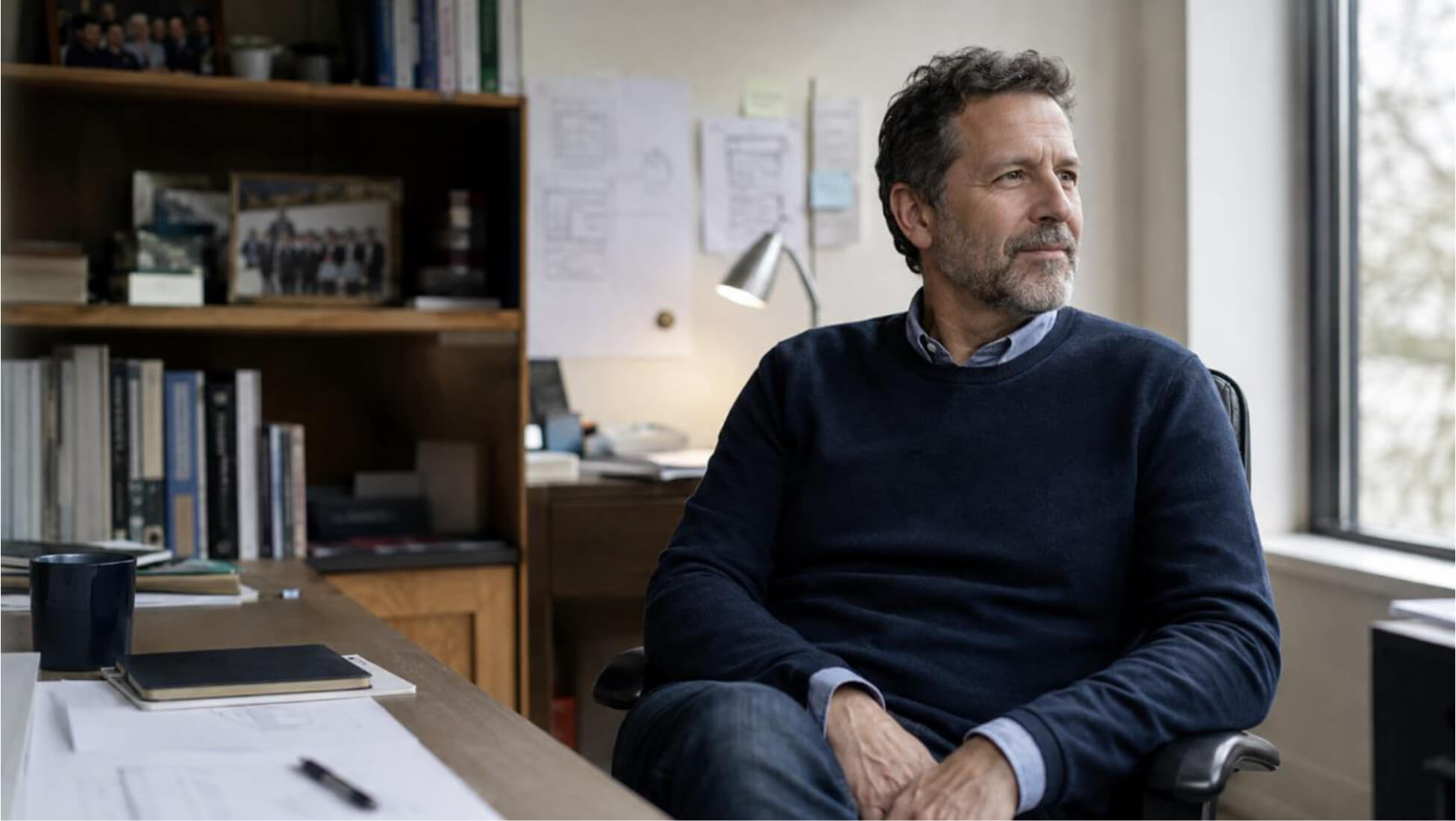
Bootstrapped SaaS founders are the sellers we’re most excited to work with at ContinuumVP. They build quietly resilient products, make disciplined decisions, and care deeply about their customers. That is exactly the type of business we want to own and steward over the long term.
The Reality Bootstrapped Founders Are Facing
Over the last years, most of the SaaS narrative has been dominated by funding rounds and hypergrowth. In parallel, a different group of founders has chosen a quieter path: no outside capital, measured growth, and a relentless focus on product and cash flow. Many of those founders now stand at a crossroads. Their business is healthy and often profitable, with recurring revenue and loyal users. But they are tired from carrying out the whole business, constantly juggling products, sales, and operations. They want a liquidity option, without turning their exit into a multi-year negotiation. At that moment, the type of buyer on the other side of the table matters more than any headline valuation.
A pattern we see often looks like this. A founder has spent five to ten years building a niche of SaaS products. They live close to their customers, know every corner of the codebase, and are present in every important conversation. But personally, they feel stuck: no liquidity, no clean way to step back, and constant pressure to keep everything working.
When they finally decide to explore selling, what they want is not just the highest possible number. They want a buyer who understands why the product matters to its users, a process that does not consume all of their remaining energy, and a future owner who will treat their work as a foundation to build rather than something to flip quickly.
What We Look for in a Bootstrapped SaaS Business
When we evaluate whether a business fits ContinuumVP, we look at a group of dimensions together rather than chasing a single metric. We’re interested in three primary markets Education Software, Financial Software, and Public Sector Software.
In these markets, we start with revenue and retention. Recurring revenue is the backbone, but the key is how sticky it is. High churn or heavy dependence on short-term tactics changes the conversation. Strong retention and expansion revenue tell us the product is embedded in customers’ workflows.
We look at product and positioning. We spend time understanding why customers buy and why they stay. Is the product a “nice-to-have,” or is it an integral part of the company’s infrastructure? Does it solve a specific problem for a well-defined segment, or is it spread thin across many different use cases?
We also look at ownership and operational foundations. Usually there is a simple ownership structure in place, where the founder(s) hold most of the equity, sometimes with a small angel round, but rarely are we interested in a complex VC structure. This usually means the founder has spent years living inside the product, talking to customers, shaping the roadmap, and keeping the company alive without financial engineering.
On the operational side, we look for clean financials, basic metrics such as MRR and understandable processes. We value enough structure to see the true shape of the business.
We also look at founder dependence. We map where the founder’s replaceability stands today, whether in key sales, product decisions, or customer relationships, and then discuss what a realistic, future transition would look like.
We are not looking for flawless companies. We are looking for businesses that have earned a sustainable place with customers, run by founders we want to sit at the table with.
Why Bootstrapped Founders Fit ContinuumVP Well
There are three core reasons why bootstrapped founders are our ideal sellers.
First, we share their philosophy. Bootstrapped founders obsess over building something useful, not just something “fundable.” They care about whether customers would miss their product if it disappeared, whether revenue is reliable, and whether the business can stand on its own legs. That is the same lens we use when we evaluate a company. We are more interested in the quality of revenue and customer relationships than in flashy growth charts.
Second, they are free from fund dynamics. Without VC in the background, founders can design an exit around what makes sense for them, their team, and their customers. When we’re able to talk about real numbers and real risks, we’re able to have honest conversations rather than narratives optimized for an investment committee.
Third, their cap tables keep deals clean. Simple ownership structures remove a major source of friction. There are fewer approvals, fewer side conversations, and fewer competing agendas. That allows us to move faster, keep legal complexity under control, and focus on building a deal that feels fair rather than trying to satisfy too many stakeholders at once.
When these three conditions are present, deals tend to be clearer, with shorter timelines, and both sides walk away feeling like they made a good decision.
How We Approach Founder-Friendly Exits
Our job is to make the “I think I am ready to sell” moment as manageable as possible for bootstrapped founders. We usually structure acquisitions around a few simple principles.
With clarity over complexity, we lean toward straightforward structures: a clear cash component at closing, and any variable element kept limited and tightly defined. Founders know what they are getting and when they are getting it.
We are transparent about our valuation. We explain what drives our view on price: the quality of revenue, churn and retention, the growth path, concentration risk, product depth, and operational resilience. Then we had a conversation about it. We try to keep a balanced pace. We move quickly enough to respect the founder’s time and momentum, but not so fast that diligence becomes superficial or chaotic. The idea is a steady, predictable rhythm where the founder always knows what comes next.
The outcome we aim for is straightforward. A founder walks away feeling they received fair value for a company they built and that the product is in hands that will continue to invest in it thoughtfully, often with them still at the helm.
What Selling to ContinuumVP Usually Looks Like
From a founder’s perspective, the journey is meant to be direct and predictable.
It starts with an initial conversation, a short call to understand the product, the numbers at a high level, and what the founder truly wants from an exit: timing, minimum outcomes, and non-negotiables.
If there is mutual interest, we move to a light data review. We ask for a focused pack with recent revenue and churn, key customer metrics, basic financials, and a concise overview of the product and the tech stack. This helps us reach a realistic view quickly.
We then share an indicative offer based on what we have reviewed and discussed, and then we propose a value range and a deal structure. The goal is to give the founder something concrete enough to react to, without pretending every detail is final at that stage.
If the range and structure feel right, we go deeper. We run more detailed diligence, complete legal and technical validation, and refine the terms together. Uncertainty is removed as we move toward a final agreement.
Once the deal is signed, we focus on closing and transition; we keep each step purposeful, so the founder always knows where things stand.
If This Sounds Like You
If you are a bootstrapped SaaS founder and this story feels close to yours, we would be glad to talk. A short, honest conversation, where you share what your business looks like today and what a good exit would mean for you personally, is usually enough to see whether there is real alignment.
From there, our job is simple. Either we explain clearly why we are a good buyer for your company, or we tell you just as clearly that you would be better served elsewhere.
In both cases, you walk away with more clarity than you had before you reached out.
Built a durable software business without outside capital? See whether Continuum could be the right long-term home